

Capturing the Supernatural
Are you a believer? Or are you a skeptic? I get into conversation with Phoenix Alexander about energy, past life memories, and the supernatural.
Strange Speculations
I am a self described skeptic when it comes to the supernatural.
I much prefer to think that there exists an entire spectrum of sensation and experience that lies outside of what we are able to perceive. We do not know what we do not know.
That doesn’t mean I don’t want to be a believer. I write speculative fiction, after all.
When I wake in the middle of the night and everything is tinted green, I would rather believe it’s because of some kind of extraterrestrial influence or because a higher dimension is leaking into the ones I can see. The explanation, that my eyes are using more rods than cones, is disappointing.
But it’s the truth.
When I wake and there is a crone levitating in the corner of the room, wearing a white night gown, with tangled black hair dripping black tar, I know I am in a phantasmatal state. I am in the borderland between sleep and waking, where hallucinations and sleep paralysis are common.
That’s how, after years, I explained away one of my three so-called supernatural encounters. A floating ram’s head with glowing red eyes outside my second story window? Obviously a hypnagogal hallucination, of course.
That leaves two. I try to apply the same lens. A supernatural force, a furnace of hatred battering down a bedroom door? Must have been a hallucination.
Except, why was it that the next morning, we found that someone had suffered a stroke just a few doors down the same hallway?
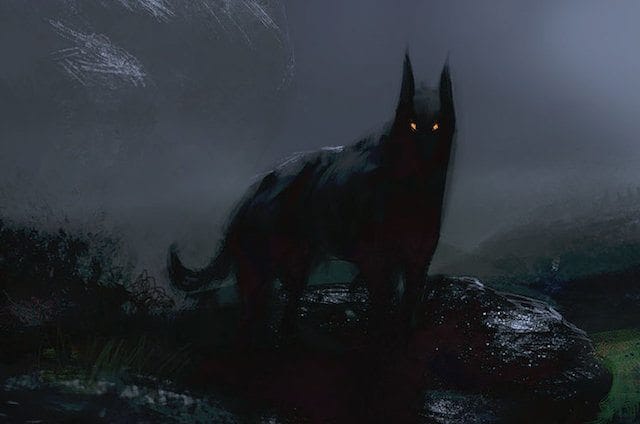
And the third, well… I was awake, wasn’t I? It was night, sure, and I’d just finished DJing my radio show in 2003. I was walking across the campus to catch the bus, when a lanky black dog, large as a VW bug, walked from the shadow of some trees to behind the science building. Just before it disappeared from view, it turned toward me and our eyes met. Glowing coals of red, bright in the sodium vapor yellow lights that illuminated the grounds.
Wild dog? Cryptid? Another hallucination?
I’ll never know for sure.
And though the need to know is sometimes overwhelming, there are still parts of me, perhaps a primordial slice of my being, or the last remains of my lizard brain, that hope I never find out.
For now, those voices are quiet, and I’m happy to sit down with Phoenix Alexander to talk about energy, the supernatural, and how we as writers portray that which lies beyond human understanding.
Community Voices
Exploring hauntings with Phoenix Alexander
Phoenix Alexander (he/him) is a queer, Greek-Cypriot author and curator of SF/F and horror. He is the Editor-in-Chief of Vector: the Journal of the British Science Fiction Association, and has published over 30 short stories and articles. He holds a Ph.D. in English and African American Studies from Yale University, and a BA and MA from Queen Mary, University of London. In his day job, he is the curator of the Eaton Collection of Science Fiction and Fantasy at the University of California, Riverside, where he stewards one of the world’s largest cataloged collections of science fiction, fantasy, and other genre materials.
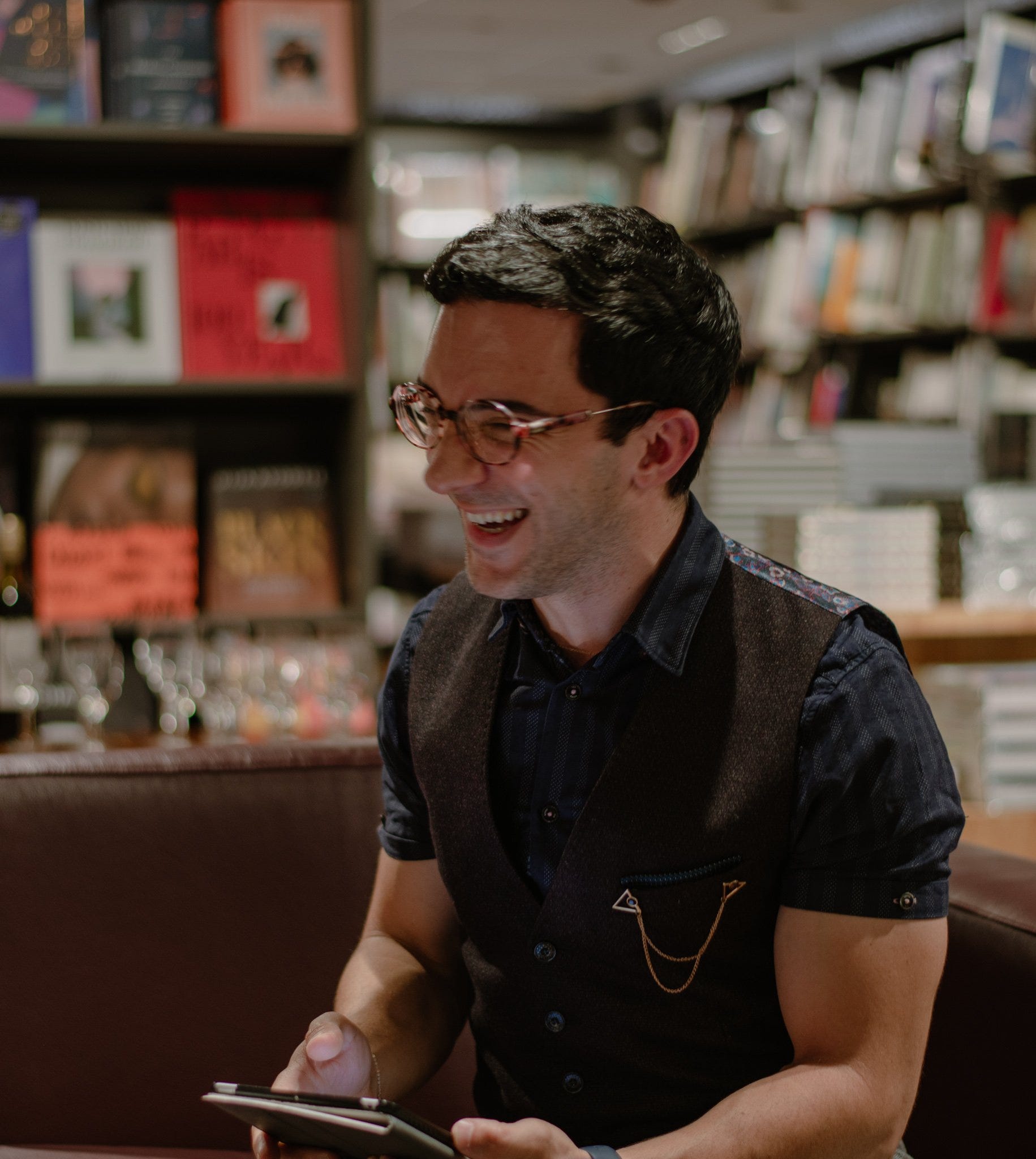
AP: Hey Phoenix! Thanks for joining me here on my Substack. When you suggested this topic, you called it, and I’m quoting here, “a bit esoteric/wooly.” I think that’s called negative reverse selling, because it pulled me into the topic right quick. You went on to mention a Greek-Cypriot background and your connection to superstition, past-life recall, and spooky experiences. What are some examples of this?
PA: Thanks so much for having me! I’m so excited to get spooky with you. I’ll start with a caveat: I strongly believe in the principle laid out by the philosopher Søren Kierkegaard in his treatise Fear and Trembling, which I’m going to bastardize and condense as: “you’re free to believe whatever you like, but recognize that, at any moment, what you believe in may be proven to be absurd.” Which is to say: I’m aware that much of what I’m about to share will sound totally ridiculous!
I am indeed Greek-Cypriot. I was born on the island of Cyprus in 1987, and moved to the UK a few years later. My earliest experiences include an overpowering sensation of “is this it?” (meaning: the physical world around me), and vivid memories and impressions of something much vaster, and quite different. It was like trying to remember a dream upon waking. I had many out-of-body experiences as a child; I’d be in the middle of doing something and the POV would suddenly switch to me above myself, looking down. I’ve also had far too many encounters with spirits to list here. As an adult—and completely unaided by psychedelics or any other substances like that!—I’ve had extremely vivid memories of past lives, accessed through guided meditations. The sense of the uncanniness of this reality is only growing stronger as I near the end of my thirties.
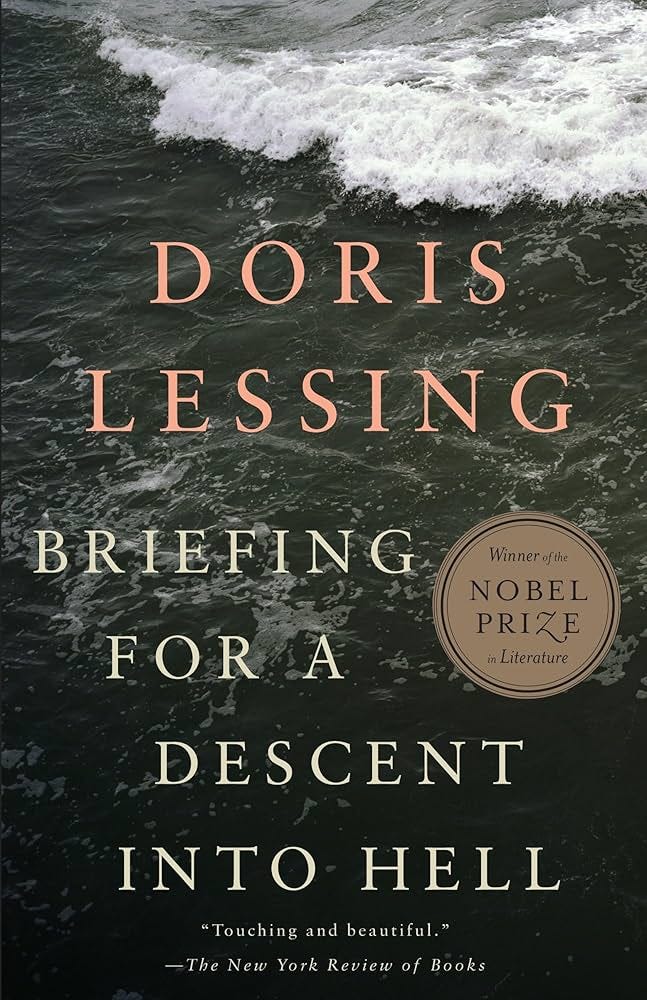
I try to explore this sense of vastness in my writing - although, of course, nothing comes close to capturing these feelings! Perhaps inevitably so. A book that I did find to be an almost life-changing description of this was Doris Lessing’s Briefing for a Descent into Hell, which I reviewed on my Instagram page back in December 2023.
AP: That's such an awesome quote from Kierkegaard, paraphrased or otherwise, and a great foreword to our discussion.
I read your review of Doris Lessing's Briefing for a Descent into Hell and was really touched by what your mother told you about her dream, "Quantum mechanics to chimpanzees." It really resonates with my post-Catholic-post-atheist-agnosticism. And that kind of overall feeling is the same that I have for the supernatural, I think. There's just so much out there that we don't know, perhaps can't know (due to sensory limitations, etc) that even though I'm a skeptic, I'm a skeptic with an asterisk.
What is it like for you when you have these moments where you are accessing these memories? And what is your mortal-limited explanation as to what's happening to you in those moments? Ancestors? DNA memories? Something else completely?
PA: Yes, that quote stayed with me since I read it, years ago! Thank you for the kind words about the Lessing book review. Religion, or at least spirituality, has always been something that has fascinated me, and something that I look for in fiction, having not been raised religious in the slightest. I really love Michel Faber’s The Book of Strange New Things as an example of ‘religious’ SF, though if I re-read it now it would probably strike me as a bit too on the nose.
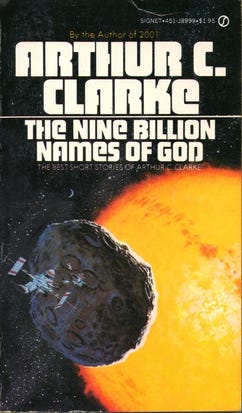
Oh! I just thought of something else: Arthur C. Clarke’s ‘The Nine Billion Names of God’ is one of my very favorite short stories - even though, by scientific standards, it’s quite implausible! But it’s extremely thought provoking and, I would say, an unexpected example of cosmic horror. (The story centers on a machine that is designed to print the name of God, in every language, and once its task is complete the universe starts to come undone, the purpose of humanity complete). This is the last line: “overhead, without any fuss, the stars were going out.”
To (finally) answer your questions: what it was like when accessing these memories is hard to describe. Moving, predominantly. Very moving. A poignant sense of being quite far from home. An easy mortal explanation would be: it’s my brain making stuff up. But there is quite a tragic sense, if you think about it, of our bounded-ness in one body, in our human lifetimes, in opposition to the uncountable forms of life (and unlife) that make up our universe. This is something that Freud calls the ‘oceanic feeling’ in Civilization and Its Discontents, and he ascribes it to our memories of being in the womb. I’m not convinced - but the suggestion is unsettling!
Lastly, the idea of ancestors is a tricky one for me, as I only know my mother’s side of the family. My grandmother’s house has certainly appeared to me in dreams a lot - a site of import, and spiritual significance - even as my grandmother herself has not been. I’ve had conversations with my mom about this and we agreed that some spirits, like my grandmother, are so ready to leave Earth, and this reality, that they choose not to appear even in astral form to the living.
AP: Wow, I really need to read that story and maybe put some Clarke on my TBR. I have yet to crack into that particular walnut.
That’s a really interesting experience. There is something melancholic about being bound, as you say, to this life. When I think about the universe and other ‘large’ concepts, I get that same feeling of tragedy. Part of it for the not knowing, part of it for knowing I’ll never know. I had never thought of it as missing something that I’d had before, though. I’ll have to think on that the next time I’m faced with something existential and see if it’s only about the present and future and not about the past. I am not 100% certain in my belief (I reckon that’s why they’re called that) but I’m a lot closer to the “I don’t believe in reincarnation” side of things when asked about it, but, like I said, I want to believe. That would be very cool.
You mentioned you agreed with your mother regarding your grandmother and her spirit and I feel like that’s a great segue to the topic of spirits. I can guess based on your answers so far that you do believe in spirits, correct me if I’m wrong, though. What do you think spirits are? And if she was so ready to leave Earth, to me that means there’s somewhere ‘else’ to go. Do you have any guesses or wishes as to what that might be?
PA: Clarke is so great! Definitely one of the better-aged SF writers of the last century.
I guess the not knowing - yet! - is the point, but sometimes just the sheer mystery of it all strikes me, in a very generative way. Perhaps that’s why we feel the need to interpret the world through art!
Oh yes - I absolutely believe in spirits, and have had many experiences with them over the course of my life. Too many to mention here! My teenage years were terrorized by one particular entity that my entire family (mother, stepfather, two younger brothers) saw, albeit in different forms, and unbeknownst to one another. At the time I thought the spirit was ‘evil,’ but I actually don’t believe in that concept, now, as an adult. I think spirits are indeed the residues of people who have died. Instead of ‘evil,’ I imagine them as composites of many different qualities, just as living people are: greed, fear, jealousy, anger, regret. It seems like the ‘correct’ thing is to move on after death - to what, or which life, or to nothing, there’s no way to say. It’s the staying that’s the problem. I guess I do believe in reincarnation, per my earlier answer with past life recalls and such. And - and this may be lengthy - but I have a bizarre story to tell, on this topic!
In 2020, when I was in Liverpool during the Covid-19 lockdown, I bought two kittens: William and Ridley. They were brothers, William a tabby, and Ridley a black cat. I lived in a one-bedroom apartment in the city center and would play with them, peeking out of my bedroom down a long hallway in a kind of human/kitten version of ‘peek-a-boo.’ One time I was playing this with Ridley, ducking in and out of the bedroom and watching him inch nearer and nearer down the hallway - and then, the next moment, I didn’t see a kitten in the hallway at all, but a shadowy humanoid figure crouched in his place. It was startling, but not frightening. (Again: I wasn’t drinking, or any substances!) Ducking back in the room and out again, I found Ridley returned to his kitten form.
It was such an odd experience that I actually wrote about it in a short story, ‘The Penitent,’ published in the July/August issue of [Fantasy & Science Fiction Magazine] in 2021. To cut a long story (slightly) shorter, Ridley sadly passed away from heart failure in 2024, after we had all moved to Riverside, California. The night he died, I returned from the vet and had to sleep on my apartment sofa due to a friend staying over (talk about horrible timing!) I had a vivid dream of him sat on the edge of the sofa in the exact form he had taken in the Liverpool apartment: a tall, humanoid figure, quite intimidating but not threatening in any way, and I was mind blown. Ridley was always a nervous cat, like he was a greater presence shoved into a small and unfamiliar body.
He appeared a few more times in dreams, in my grandmother’s garden, in Cyprus. I still see him now and then, in little flashes, black cat stickers on a stranger’s lanyard or laptop, or through a sense of being observed, intensely but not unkindly. We had a very special bond. You can see he is my pinned post, again, on Instagram.
Do you think it is possible to be ‘haunted’ by something or someone while they are still alive?
AP: That’s such an interesting story with Ridley. And kind of an uncomfortable one, too, for me! It makes me think of how differently I treat pets versus humans; how I’m so much more comfortable giving and receiving unconditional love to a dog or cat, while that kind of surrender still eludes me with humans. The idea that some of these pets I’ve connected with were once human gives me an almost intruded upon feeling. Intruded upon by a now-dead stranger. Maybe that’s why I don’t really believe in multiple lives.
I did just hear someone describe life and death in a way that I felt was very beautiful. It’s my turn to paraphrase: we all come from the same soup pot, but each of us is our own ladle-full, and when we die, we are ladled back into the soup. I find that idea a little more palatable, I think. We’re all the same, made of the same thing, but unique, one-time expressions of it.
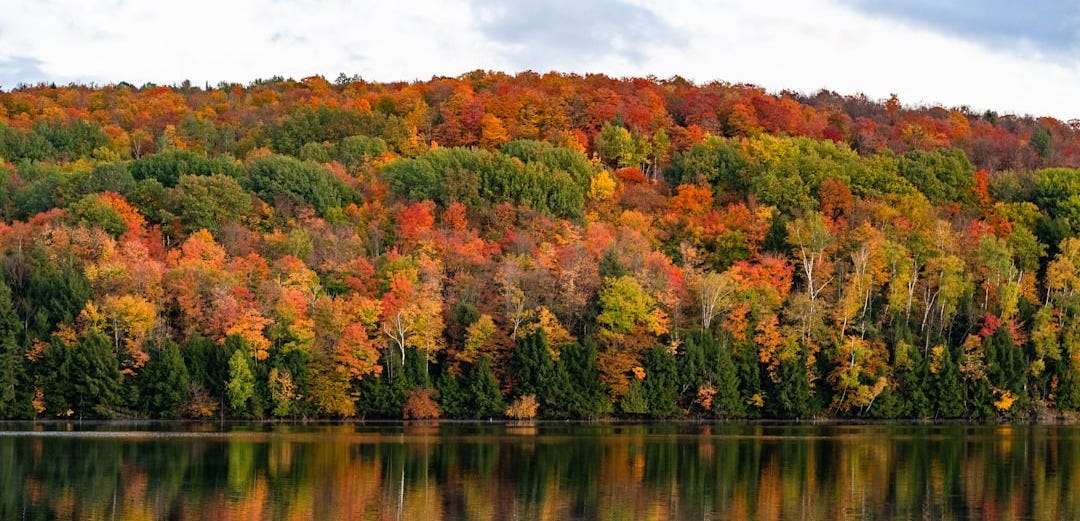
But, to get to your question, I actually think being haunted by something or someone that still exists is far more likely. Are we not haunted by exes? Trauma? Do we not feel melancholy from songs, petrichor, or when drinking a particular drink? That’s what haunts me, at least. And, to be clear, I believe a haunting can be good and/or bad. There’s a longing I feel somewhere in my chest when autumn rolls around in Los Angeles. It’s a yearning for the conflagration of color that signaled fall in Western Massachusetts when I lived there 23 years ago. And it’s there right now. I know exactly where I would go to satisfy that yearning. That feels like more of a haunting than anything supernatural I have experienced.
I’ll attempt to wrangle our conversation just a little bit, purely for the sake of the readers, and I want to ask you about some of your work. In your story, ‘Dromedary Mary,’ the titular character feels haunted by the world around her, haunted by the past and future. Do you feel hauntings are a big part of your writing?
PA: That’s a really powerful response! I totally get it. I love your definition of haunting, too.
Ok, I promise I’ll get back on track and talk about writing! Your interpretation of ‘Dromedary Mary’ is quite thought-provoking; I guess the main character is haunted in the sense that she is so afraid, and reaching out for unlikely comforts given the intensity of that fear. I’m obsessed with how we, all of us, can kind of move through the world and see it so differently through the lenses of our interiority. What looks like madness to some can be complete freedom to others. (Not that I’m justifying delusional worldviews: far from it! I’m just boggled as to how people can become so alienated from the idea of a Good world).
Hauntings do, I think, play somewhat of a part in my writing, but it’s not really something I think about. It’s that mapping of different worldviews onto one another that, for me, generates a really interesting friction. This is cheating a bit, but I have a story forthcoming in Lightspeed [Magazine] that directly plays with this idea. What happens when another’s conviction ‘haunts’ us? How to separate the porous barriers between our own minds and those of others: that influence, in as you say, both good and bad ways?
Sorry, one more thought about something you said: I’m so much more comfortable giving and receiving unconditional love to a dog or cat, while that kind of surrender still eludes me with humans.
I’m not entirely sure love is ‘unconditional’ though, maybe? That seems like it wouldn’t be doing justice to the object (or person, or creature) to which love is directed, if it’s uncritical. I guess love, to me, doesn’t exist in a vacuum, but is a nuanced thing, built up, nudged into new pathways, chipped away at, or grown, etc.
AP: I think that’s what separates the love I feel for a dog from the love I might feel for a human. It is unconditional and uncritical love when I love a pet. The absence of that critique is what makes it absolute, in my opinion. By imagining that pet has some previous life existence within them, it introduces criticism. Was that life worth loving? Were they Good? Is it someone I would be able to love at any level? That’s what I’m referring to. If I love a creature, they are the creature, and I can love them without condition. If they are a human, well…
I’m glad you brought up your story in Lightspeed, as I wanted to talk about that, too. I’m looking forward to seeing how you write about how someone’s conviction can haunt someone, which I think shows that at least in some way, you believe you can be haunted by the living. And I think it’s very fair of you to say that they play a part without thinking of them (almost like hauntings haunt you and your writing). The writing process can be like that, I’ve found. I think I’ll be writing one thing, and throughout the drafting and editing process, find it’s something else. Then once the piece is out there, I’ll have others point out things I never consciously considered, too.
Hauntings within hauntings.
Bringing us back from the ephemeral and cerebral, can you give me a bit more info on your Lightspeed story? What’s it called and when is it coming out? And what’s next for you?
PA: I’m so intrigued by your distinction between love for a human and an animal! “By imagining that pet has some previous life existence within them, it introduces criticism. Was that life worth loving? Were they Good? Is it someone I would be able to love at any level?” Is the idea of loving something/someone that may not be worthy of love, anathema? I wonder if, for me, this is where a religious sensibility kicks in. Maybe loving something is like having faith: absurd, could-be-wrong, and there it is, anyway.
Yes, I totally experience the same thing when writing! The ‘message,’ or ‘soul,’ or ‘spine’ of a story sometimes only reveals itself to you with the writing. The Lightspeed piece is called Repentance in Blue and tells the story of a young boy who may or may not have been abducted by extraterrestrials. The story is split in two parts: the first being the mother’s account, and the second being the boy’s. I love an unreliable narrator - so what could be better with two? It was fun to both challenge my and the reader’s assumptions. I honestly don’t know when it’ll be published! It sold in April, so it will most likely be out by the end of 2026, but I’m not quite sure. I also sold my first story to Nightmare [Magazine] in April, too, and that’s something much more sinister, about a would-be serial killer who finds a supernatural way to quell his murderous impulses.
In terms of what’s next, I’m finishing up a new novel project while my current (second!) novel is out on submission (the first novel basically died on sub). It’s been a bit of a grind in the submission pits - I thought when I finally got an agent, back in 2022, I would be guaranteed a book sale, silly me! - but I’ve come to the point now that the excitement has worn off, and I’m just focusing on what I can, which is the writing. I tend to write science fiction, which is not an easy sell these days, but this current project is more self-consciously ‘speculative’/’literary. We’ll see!
AP: The submission pits, eesh. Sending you every single good vibe I have for that. The time I was on submission was harder than when I was querying for me. You’re definitely doing the right thing by focusing on the writing. It took me a long while to learn that lesson!
Congratulations on both those sales! I love an unreliable narrator, too, so I’m definitely looking forward to Repentance in Blue!
And, to work my way backwards, I do not think loving someone unlovable is anathema, but—ever the logician here—I want to make an informed decision. It becomes a choice. I guess I see it as I’m coming from a place of scarcity when it comes to other humans whereas when I think of the love of a pet, I’m starting at “yes, I love you.” Maybe it was my Catholic upbringing that has done this to me, as though I was certainly told to love thy neighbor, I was more often than not shown that others are judged. That disconnect between what Jesus’ supposed teachings were and what the practice of the church (and the whole world, it seems sometimes) was one of the major reasons I left the church and organized religion.
I think I also didn’t like being told what to do, though.
What draws you to science fiction specifically? And, actually, I’m curious about how you define science fiction. I feel like that term covers all manner of writing.
PA: Thanks for the good vibes and encouraging words about being on submission! Apparently things are so slow these days, and I know so many people who are just... waiting.
Ah - you’re a logician! That’s so funny, I’m the complete opposite. I run on vibes and intuition and, honestly, a little bit of (controlled) chaos. But my intuition is pretty good, and has served me well over the years. I really feel you about the disconnect between church teachings and how people behave in church: in Cyprus, at least, (and in Texas, actually, where my partner’s family is from) church is kind of like a gossip-fest, sometimes mean-spirited. “Did you hear so and so got a divorce? Oh my gosh, so-and-so made a fool of themselves at the fundraiser the other weekend... Timmy got into Stanford...” blah blah blah. There’s me thinking WHY AREN’T YOU PONDERING THE PROFOUND MYSTERIES OF THE COSMOS???!
Speaking of: that’s what draws me to science fiction! I have a joke with my colleague whereby we both say we have the need to ‘get into space,’ in our minds, and science fiction takes us there. It’s a genre that invites the truly strange. Unfortunately, so much of it (like a lot of art) is pretty rote. I want to think about what it means to exist off the planet, out of my own self, out of human bodies entirely.
My definition of SF, even in my day job as a curator, is very expansive, ranging from aforementioned space stories to something like the literary surrealism of the 60s and 70s (my favorite literary decades!), and Doris Lessing’s ‘inner space’ fiction that is as much to do with the phantasmagoria of the human psyche as alien life, etc. I read a lot of Freud in college, and even though he gets a lot of things wrong, a lot of his insights strike me as, again, intuitively... on to something.
Lastly, I think the ‘haunting’ aspect of SF is that engagement with a something ‘far greater’ than the human: a greater consciousness, greater technology, new modes of physics, novel and perhaps unrecognizable forms of sentient life and so on... how can we, as a limited species, tap into a cosmic imagination or atavistic memory of being something else, somewhere else, and set it down to paper, that it might connect with others? How can we honor the memories or imaginative possibilities that ‘haunt’ us, with our woefully limited human faculties?
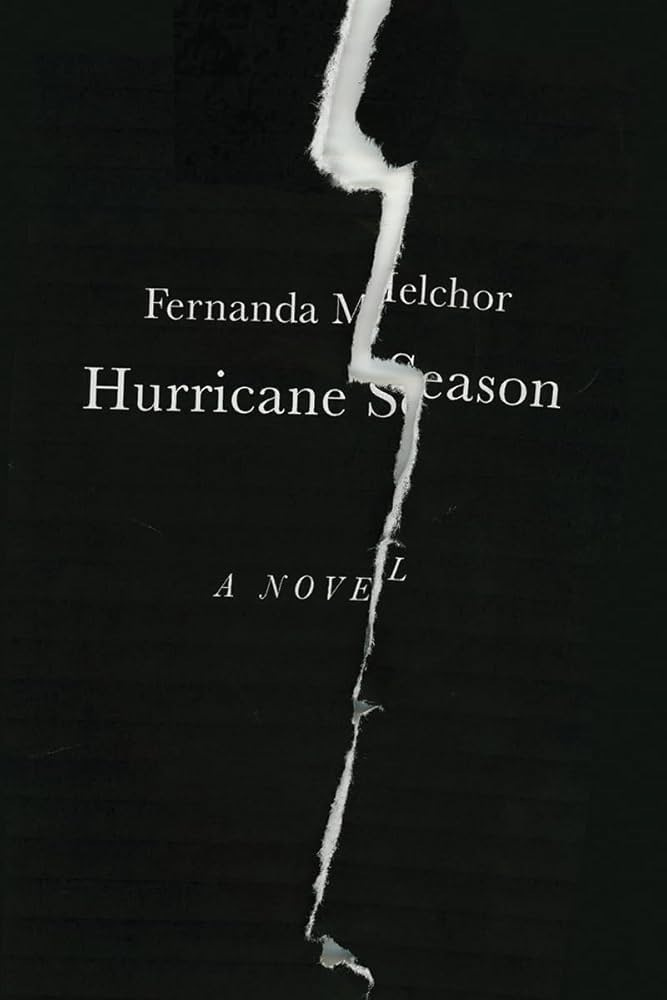
AP: I’m in total agreement with what you said, even if I have never come even close to defining it so eloquently. I think that’s what has me tend to want to say I write speculative fiction instead of a specific genre, because there’s so much overlap and so much that can be interwoven between fantasy, science, and horror. One of my favorite books, and one I talk about all too often, is Hurricane Season by Fernanda Melchor. It’s horror, it’s fantasy, it’s magical realism... but it’s also just a “literary” work of fiction. I’m never one to advise someone else (or myself) to “write to market” but I have a good feeling about your speculative/literary work. I feel like readers are really hungry for that kind of nebulous “what if” stories that aren’t easily put into a single genre.
Going back a bit to what you said, “Woefully limited human faculties” especially I think is hitting the nail on the head. That’s the main thing I think about when I discuss skepticism of the supernatural and agnosticism in the religious. We just don’t know what we don’t know, and I accept that our understanding and ability to sense reality is limited. Even without getting into higher dimensions, the sense of cosmic scale gives me a chuckle. What are we to ants? To bacteria? If we extrapolate in the other direction, what are we diminutive creatures to?
PA: Totally. I love how the broad term ‘speculative’ allows for that play, that freedom. ‘Hurricane Season’ sounds incredible, and is going straight to the top of my TBR list. Hurrah for more unreliable narrators! “Play” seems to be my word of the moment, and I adore literature - any art, really - that leaves the reader or viewer on shifting ground. That’s where the pleasure is, and the fun. We can really do anything with words. I really appreciate your kind encouragement about writing, and publishing, in that “nebulous” genre area, too, for lack of a better term! I hope I get to publish many books in this life. Everything in its time.
AP: I want to thank you for your time and enthusiasm in this conversation, Phoenix. When you reached out and we talked about your work, I didn’t know just how much fun I’d have listening to your experiences and beliefs.
Best of luck in the abyss of submissions. It’s a rough one, but you’re doing the right thing and I know you’ll move beyond it.
PA: I had loads of fun chatting, too, and it was fantastic to hear more about you and your work! Congratulations on your debut, Tapeworm, which I can’t wait to read in August. I think we’re down the road from one another - I’m in Riverside, and you’re LA, right? - so keep me posted about book launches/parties!
AP: We are indeed down the road from one another! I actually am a big fan of the Cheech museum in Riverside and one of these times I’ll make it inside that beautiful library downtown.

AP: Where can people find you?
PA: I’m not too much on social media these days, but I guess my main platform is Instagram (@alexander.phoenix), where I post book reviews. I periodically check in to BlueSky (@dracopoullos.bsky.social), and you can find links to all of my works on my website: www.phoenixalexanderauthor.com.
AP: Fantastic. I’ll be asking for updates on both submission and the “nebulous” novel. Thanks again for making yourself available to talk, Phoenix!
Readers, I hope you enjoyed this interview; I know I did. Definitely a departure from other interviews I’ve done for Strange Speculations. Let me know if this kind of interview was interesting to you, too!
You can find Phoenix’s story The Penitent by purchasing a copy of SF&F magazine here. His upcoming stories I’ll link here and on IG once they’re out.
I’ll be continuing my traditional publishing series in between working on the latest round of edits for Sorrow Lake. More on that later, too, but for now…
Be well, stay safe, and love each other.
This was such a cool conversation; thank you both for sharing! I'm leaving with some cosmic questions to ponder and new stuff for my TBR :) Would definitely love to see more pieces like this in the future!